


Eye exercises are a simple method to preserve and restore vision.Before performing a series of eye exercises, it is necessary to rest a little, relax and not start immediately after working for many hours at the computer or after reading texts.And the most important thing is that these exercises must be performed regularly, especially in the context of drug treatment.
The basic rules for performing this type of eye gymnastics are simple:
- Do it in the morning and evening, immediately after morning hygiene procedures and before going to bed.
- Each exercise is performed 5 to 30 times, with a gradual increase in the load.
- Do not make sudden movements of the eyelids and eye muscles while performing the exercises.
- Exercise while removing glasses or glasses.
- Between complex exercises, do simple and unloading exercises, in the form of frequent and relaxed blinks.
"Beta version" of eye exercises
The main thing is to start.To do this, you can use a series of 5 basic and simple exercises.Which will relieve tension and develop the muscles of the eyeballs, the eyelids, the ciliary muscles that control the accommodation of the eyes (that is, they force the lens to work, changing its focal length depending on the distance to the object in question), and the radial and circular muscles of the iris, which contract or dilate the pupil.
- “Big eyes”: sit up straight, relax the neck and shoulder region, close your eyes tightly for 5 seconds, then open your eyes wide, as if surprised, look at the world around you.Repeat at least 8 times.Exercise will help strengthen your eyelid muscles and improve your blood supply.
- "Massager."Clean, with soap, wash your hands.Close your eyes relaxed, press two or three fingers on the lowered upper eyelids for 2 seconds.Do this at least 3 times.Exercise improves the circulation of intraocular fluids.
- "Making drawings."Close your eyes, relax and imagine any image of any complexity.Keep it in front of you at all times, trying to examine and invent details.
- "We're watching the fly."Without turning your head, you imagined a fly flying in a circle in front of you.We followed its flight without taking our eyes off.The fly flies in front of you, first clockwise and then counterclockwise.Let an imaginary fly make three circles in one direction and in the other.
- "Shooting range".“Shoot with your eyes” up, down, right, left.Mentally circle with your eyes a rhombus, a circle, a square, an arc, then, often, often, like a butterfly with its wings, flapping your eyes.
Use the exercises as a basis, be sure to include them in a complex of any complexity.These 5 exercises are useful when working in front of a computer screen or, which has become very rare, after correcting texts in the library reading room.Reading gripping fiction also requires a periodic break from your eyes and the above exercises.
This type of eye exercise is especially relevant if the workplace (computer keyboard) is not well lit or if the general low level of lighting in the room contrasts sharply with a bright screen.
Maximum set of exercises.
The following set of eye exercises has been developed both for people with normal vision, whose eyes experience significant visual stress, and for people with low myopia and hyperopia, within the range of “+” or “-” 3.0 -3.5 diopters, without additional pathological visual impairments.
- Fast “burst” flashing for 2 minutes
- With your eyes closed, alternate between closing your eyes tightly and simply closing them relaxed.The periods of closing your eyes and relaxing are 5 to 6 seconds.The total duration of the exercise is 2 minutes.
- Standing directly in front of the window, place a circle of paper (preferably black) on the glass at eye level and fix your gaze on it.Then sharply move it to the farthest object outside the window, ideally located on the horizon, that is, in the conditional "infinity".Look alternately at the circle and then at infinity for 10 seconds, repeating the gaze changes up to 10 times.
- With clean hands, massage the eyelids of closed eyes and their corners for 2-3 minutes, alternately for each eye separately.
- Stand straight, raise your arms bent at the elbows in front of you.Begin to gently straighten your right hand, following the tip of the extended index finger with your eyes.Return your hand to its original position and begin doing the same with the other hand.Repeat 5-6 times.
- Close your eyes and, with well-washed hands, press the upper eyelid of the closed eye 7 times, alternately to the right and to the left.The duration of the pulse is 2 seconds.
- Standing, without moving your head or neck, take a quick look at the ceiling.Then lower yourself to the ground, as close to your feet as possible.The exercise is repeated up to 10-12 times.
- Make a pendulum from available materials, in the form of a huge weight on a 70 cm long thread.Shake it in a plane perpendicular to the direction of your view.Watch the weight of the pendulum swing without taking your eyes off it for three to five minutes.
- LED strip.The tape is placed in the shape of a circle on the wall and the "running lights" mode is set.Monitor the movement of the lights along the tape for 3 to 5 minutes.The lighting in the room should not be too poor;It is advisable to turn on the normal lighting in the room at night to illuminate and avoid too much contrast between the lights and the dark.
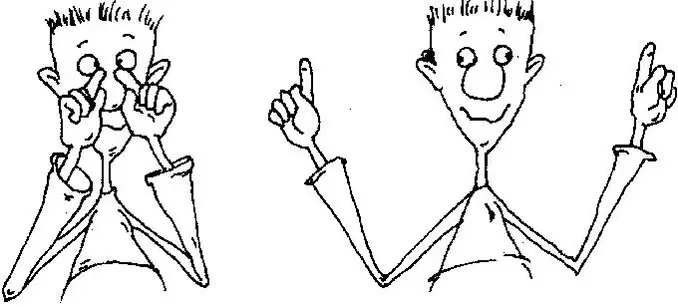
Sets of exercises to restore vision.
In case of myopia, especially of a high degree, as well as a large amount of hyperopia, some modifications, sometimes significant, are made to the set of exercises.
Eye exercises for myopia.
- Blinks quickly and frequently for ½ minute.Give your eyes a rest, close them and, relaxing, sit like this for about a minute.Blink again for half a minute and sit for a minute.Repeat this 4-5 times.Don't rush.The relaxation between blinks must be complete;To do this, it is best to sit in the "coachman's posture": on the edge of a chair, with your legs straight, your knees bent at right angles, and your palms relaxed on your knees.Shoulders down, back slightly bent.
- "Surprised look."Alternatively, close your eyes tightly for 10 seconds and then open them wide at the same time.Do 10 to 12 repetitions of this exercise.
- With your hands well washed, putting 2-3 fingers of each hand together to form a “rule,” press them on your drooping eyelids.It is not necessary to press too hard, avoiding the appearance of luminous fog or bright spots of color under closed eyelids.
- Using your thumbs placed over your eyebrows, raise them, while resisting this action, lowering the direction of your gaze.
- Tilt your head back and look down until your eyes feel sore and tired.Then lower your head with your chin resting on your chest and look up from under your eyebrows until you achieve the same result.Repeat 8 to 10 times.
- Stand up to your full height.At a distance of 1 to 1.5 meters from you, under your feet, mentally draw a gradually expanding circular spiral on the ground.Follow your spirals unwinding to the end, then also notice how it tapers toward the center.Do the exercise 3-4 times, depending on the “size” of this mental spiral.
For hyperopia
- Write letters with the tip of your nose.Better, not printed, but written, with its alternation of smooth and broken lines.You need to look at the tip of your nose.The time for writing letters is 10 to 12 seconds, then a half-minute break and start again.Make 6-8 approaches.
- Having made a lattice with the fingers of both hands, try to examine objects located 10-20 cm from you.
- Place a 20-30 cm shiny object at a distance of 3-4 meters from you.Stretch your hand forward, gently move your gaze from the object to the palm of your hand.
Therapeutic exercises for astigmatism.
- Place a sheet of paper the size of a standard Whatman paper on the wall.Draw a circle or slightly elongated oval on its surface with a contrast marker.Stand one and a half meters away from it and run your eyes along the line of the circle (or oval), without looking up, first clockwise and then counterclockwise.With pauses of 10-12 seconds.Repeat the exercise 3-4 times.
- Mentally draw crosses, triangles, squares.Move your eyes over them, abruptly changing the direction of your gaze.Use only straight lines for this.
- Exercise with an assistant: while standing still, so that only the eye muscles work, ask someone, holding a pen or pencil vertically at a distance of one meter from you, to quickly move it from left to right, up and down.Don't change the position of your head and body!
Exercises for strabismus
Strabismus, or strabismus, cannot be treated by therapeutic exercises themselves.It is treated with special glasses in which the lenses are adjusted, deviating the optical axis of the glasses from the real one.Eye exercises serve as an additional factor that stimulates recovery.
- The starting position is the fingertip on the tip of the nose.Lift your finger from your nose and move it up until your arm is fully extended.The task is to follow the fingertip with your eyes without looking away.Then return your finger to your nose.Repeat the exercise 4-5 times.
- Move your eyeballs up and down, left and right, without changing the position of your head, 5 to 6 times.After each approach, close your eyes for half a minute, without squeezing them, but keeping them relaxed.
- Close your good eye.While looking at an object out of the corner of your eye, turn your head toward the affected eye, without letting the object leave your direct field of vision.If both eyes are squinted, do this exercise in turn for each.
- Close the healthy eye and begin to quickly move the patient in different directions for half a minute.Let it rest for a minute.Repeat the exercise and so on 4-5 times.

Additional Tips
The optimal time for eye exercises for adults is 10 to 15 minutes total.For children: 5-8 minutes.
When the weather is good, on a white sand beach, when it is sunny in winter with freshly fallen snow and, above all, in the mountains, wear sunglasses.
A good additional exercise for all types of eye pathologies (as well as for energizing healthy eyes) can be the use of a "bunny" with a laser pointer on.Just don't move the beam along the walls, ceiling or floor too quickly so that your eyes don't get too tired while following the "bunny."And do not allow the beam to hit the mirror surfaces so that the laser beam can reflect and enter the eyes;This can damage the retina!
Gymnastics for glaucoma.
Gymnastics for the diagnosis of glaucoma usually requires, in addition to pharmacological treatment, exercises that will help improve the circulation of intraocular fluids.
- Focus your eyes on your fingers placed in front of you at a distance of half a meter.Begin to spread these fingers apart in a V shape, without losing focus on the point roughly between them.
- Standing about two meters from the window, focus your eyes first on the finger extended in front of you, then on the handle for closing the window, then on a sheet of wood located about 5 meters outside the window, and then on the horizon.Perform the steps in reverse order, returning to the finger of your extended arm.
- With your head stationary, move your eyes to the left and right, limiting your sector of vision to the line of the nose (approximately 90⁰).
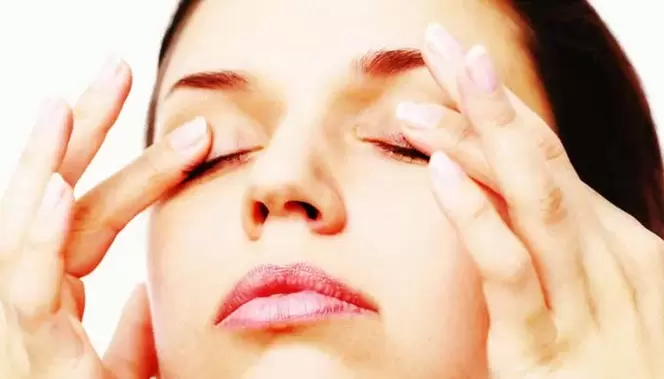
A separate exercise for eye accommodation.
- Sit in front of a table, the opposite edge of which is about one meter from you and the nearest one 20-25 cm.The eye height above the table is 30 to 40 cm.
- Take a rope or flexible cable 4-5 meters long, crumple it to form a shapeless, but not very tangled ball, throw it on the table so that it occupies the entire area to the opposite edge of the table.
- Try to make the loops of the ball face from right to left, from you to you.
- The two opposite ends of the rope/cable should protrude freely from the ball at any location.
- Without changing the posture or position of your head, without moving it, try to trace all the intricacies of the ball along its entire length.
- The exercise is performed for speed;The faster you accurately track all the loops and changes of direction, the better.
- After each pass, it is necessary to rest your eyes for 30 to 40 seconds.
Conclusion
With any vision problem, especially when there is pain, pain in the eyes or excessive dryness in them, a visit to an ophthalmologist should be urgent!
In the absence of pronounced or pathological problems, with 100% vision, perform vision exercises yourself;These eye exercises will serve as an excellent means of prevention.
And if done in the morning, this eye exercise will tone the eyes, facilitating their fluid and problem-free functioning throughout the work day.